
The Threat Isn’t Always What You Think: Three Real-World Lessons in Personal Protection
The Threat Isn’t Always What You Think: Three Real-World Lessons in Personal Protection
By Coach Chuck Giangreco | Integrated Martial Athletics
Most people have an idea of how they would respond to violence.
They imagine recognizing the threat, making the right decision, and using whatever skills they’ve developed to protect themselves or someone they love.
But there’s a problem with that picture.
It assumes the situation will unfold the way they expect.
Real-world violence rarely offers that luxury.
The person you thought was unarmed may have a concealed blade. The confrontation you thought involved one aggressor may suddenly involve several. The person you expected to protect you may freeze, hesitate, or become fixated on something that doesn’t matter.
And the decision that seemed obvious from a distance may become considerably more complicated when you’re the person standing in the middle of it.
The danger isn’t simply what you don’t see. It’s what you assume you already understand.
At Integrated Martial Athletics, one of our central principles is Capability Creates Options.
But capability isn’t just the ability to strike, grapple, or overpower another person.
It’s the ability to recognize a changing problem, make appropriate decisions under pressure, and adapt when your original plan no longer makes sense.
Three recent video breakdowns illustrate why this matters.
1. The Capable Dad: Preparation Creates Options
This is what a real protector looks like.
In our first breakdown, a father faces an immediate, potentially deadly confrontation involving a firearm.
There isn’t time to develop an elaborate strategy.
There isn’t an opportunity to establish ideal conditions.
And there certainly isn’t any guarantee that the situation will unfold according to a familiar training sequence.
What matters is the ability to recognize the threat, make decisions, and act with the resources available.
This is where the concept of capability becomes much more meaningful than simply being tough.
Protection Is a Responsibility, Not an Identity
It’s easy to describe yourself as a protector.
It’s another thing entirely to develop the physical skills, judgment, awareness, and emotional control that protection may require.
The distinction matters.
You can love your family deeply and still be unprepared for a violent emergency.
You can have tremendous courage and still lack the ability to act effectively.
And you can possess considerable fighting skill while making decisions that unnecessarily increase the danger to the people you’re trying to protect.
Real capability requires more than intention.
It requires preparation.
That preparation might involve recognizing warning signs early enough to avoid an encounter.
It might involve moving loved ones away from danger.
It might involve creating distance, finding cover, calling for help, or making a difficult decision when no safe option is immediately obvious.
And in circumstances where physical action is unavoidable, it requires skills developed through meaningful practice.
You don’t get to choose when your capability will be tested. You only get to choose how seriously you prepare beforehand.
Capability Is Not a Guarantee
There is another important lesson here.
Training doesn’t make you invincible.
No martial art, defensive tactic, or personal protection system can eliminate the uncertainty of a violent encounter.
A firearm makes that reality especially clear.
Even capable, prepared people can be seriously injured or killed.
The purpose of training isn’t to convince yourself that you can control every outcome.
It’s to improve your ability to recognize opportunities, make decisions, and respond appropriately when the stakes are high.
That is a much more responsible understanding of personal protection than the fantasy of always winning.
Watch the breakdown: The Capable Dad — This Is What a Real Protector Looks Like
2. The Target Bag: Are You Protecting What Matters?
Our second breakdown raises an uncomfortable question.
If this were your wife, would you still be standing there yelling while clutching a Target bag?
In the footage, a man continues holding a shopping bag while his wife is involved in a violent confrontation.
The most important teaching point isn’t whether he should have thrown a punch or attempted a particular technique.
It’s his apparent inability to shift priorities as the situation develops.
His attention remains attached to an object while the circumstances around him demand reassessment.
This is a problem that reaches far beyond martial arts.
Stress Changes What We Notice
Under pressure, attention can narrow.
People may become intensely focused on one person, one task, one object, or one immediate problem.
Meanwhile, they fail to recognize other information that could be more important.
This is often discussed in relation to attentional narrowing or tunnel vision.
It doesn’t mean everyone responds identically under stress. Nor can we know everything someone is thinking from a short video.
But it does illustrate a valuable training question:
Can you recognize when your original priority is no longer the right priority?
Imagine entering a confrontation believing your objective is to stop someone from taking your property.
Then the situation escalates.
Someone you love is now in danger.
An escape route opens.
Another person enters the encounter.
Or the aggressor produces a weapon.
If your attention remains fixed on the original problem, you may fail to recognize that the situation has fundamentally changed.
The Objective Is Not to Win the Argument
Personal protection requires a clear understanding of what you’re trying to accomplish.
Is the objective to defend your pride?
Retain possession of a shopping bag?
Punish someone for disrespecting you?
Or protect the people who depend on you?
Those objectives can lead to very different decisions.
The best response to violence isn’t always to fight.
Sometimes it’s creating distance.
Sometimes it’s moving someone out of danger.
Sometimes it’s surrendering property that can easily be replaced.
Sometimes it’s using verbal communication to interrupt escalation.
And sometimes physical intervention may be necessary to stop an immediate threat.
The appropriate response depends on the circumstances.
What matters is your ability to recognize the actual problem instead of becoming trapped by your first reaction.
Train Decision-Making, Not Just Techniques
In a martial arts academy, it’s relatively easy to create a training environment in which everyone knows the objective.
The instructor announces the drill.
Your partner assumes the correct position.
You execute the technique.
You repeat.
That can be useful for developing mechanics.
But if every exercise begins with a predetermined problem and ends with a predetermined solution, you’re leaving an important capability underdeveloped.
You also need opportunities to recognize changing conditions.
To decide whether to engage or disengage.
To recognize when protecting another person changes your priorities.
To understand that successful personal protection may mean leaving the encounter without ever throwing a strike.
The objective isn’t to demonstrate how much damage you can do. It’s to create the safest realistic outcome available.
Watch the breakdown: The Target Bag — What Are You Really Protecting?
3. The Mouth Razor: There Is No Such Thing as a Guaranteed Unarmed Encounter
The third breakdown demonstrates one of the most dangerous assumptions people make about real-world violence.
They believe they’re dealing with an unarmed opponent.
Until they aren’t.
In the footage, what initially appears to be an empty-hand confrontation suddenly involves a razor blade concealed in the aggressor’s mouth.
The circumstances change almost instantly.
And with that change comes an entirely different level of danger.
Not Seeing a Weapon Doesn’t Mean One Isn’t Present
Sporting environments establish boundaries.
In Brazilian Jiu-Jitsu, you generally know that your training partner isn’t going to introduce a knife.
In boxing or Muay Thai, you know what equipment is permitted and what actions are prohibited.
There are rules, referees, training partners, and an agreed-upon framework.
These are important features of safe, productive training.
But they aren’t guarantees you can carry into an uncontrolled confrontation.
Outside the academy, the other person hasn’t agreed to your rules.
They may possess a weapon.
They may have accomplices.
They may attack when you’re distracted.
And they may escalate in ways you didn’t anticipate.
An apparently empty-handed encounter is not necessarily an unarmed encounter.
Why Watching the Hands Isn’t Enough
One common piece of personal protection advice is to watch someone’s hands.
There’s value in recognizing suspicious movements and potential weapon access.
But during a fast-moving physical confrontation, continuously tracking both hands visually may be unrealistic.
Your attention is already divided among balance, distance, positioning, movement, obstacles, and the actions of the other person.
That’s why training needs to go beyond simply telling people to look for a weapon.
You need to develop an understanding of relative position and access.
Where are the other person’s limbs?
Can they reach their waistband or pockets?
Are you controlling an arm without recognizing what the other arm can do?
Are you positioned so closely that you cannot create separation when the circumstances change?
Are you assuming a familiar grappling exchange will remain an empty-hand problem?
These are questions worth exploring in supervised, controlled training.
The objective isn’t to develop a magical defense against concealed weapons.
There isn’t one.
It’s to reduce dependence on assumptions that may not survive contact with reality.
The Tool Matters. So Does the Person Using It.
A razor blade is dangerous.
So is a knife, a firearm, or an improvised weapon.
Tools can dramatically increase the consequences of an encounter and should never be underestimated.
But focusing exclusively on the weapon can also obscure the larger problem.
You’re dealing with a person making decisions.
That person may conceal, access, introduce, or use a weapon at a moment you don’t expect.
Their intentions, behavior, position, and opportunities all matter.
This is why I teach martial arts as an integrated problem rather than a collection of isolated techniques.
Striking, clinch work, grappling, positional awareness, defensive movement, and disengagement need to connect.
Because the circumstances that determine which skills matter can change without warning.
Watch the breakdown: The Mouth Razor — Never Assume Unarmed
The Common Problem: Assumptions Under Pressure
Look at these three encounters together.
In the Capable Dad incident, the lesson is preparation and the ability to act under immediate pressure.
In the Target Bag incident, it’s the need to recognize priorities and adjust decisions when circumstances change.
In the Mouth Razor incident, it’s the danger of assuming that what you initially see represents the entire threat.
Different situations.
Different decisions.
Different consequences.
But one common principle:
Your preparation must account for uncertainty.
That doesn’t mean living in fear.
It doesn’t mean treating everyone around you as a threat.
And it certainly doesn’t mean seeking confrontation to prove your capabilities.
It means understanding that a controlled training environment and an uncontrolled violent encounter are not the same thing.
Your training should help bridge that gap without pretending the gap can be eliminated.
How to Build More Adaptable Martial Arts Skills
At Integrated Martial Athletics, we emphasize integration because real problems don’t arrive neatly divided into individual martial arts.
You don’t get to announce that a confrontation will be strictly striking.
You don’t get to decide that it will remain standing.
You don’t get to assume there will be no weapons.
And you don’t get to guarantee that the person you’re protecting will behave the way you expect.
Meaningful preparation needs several layers.
Build Reliable Fundamentals
Develop sound striking mechanics, defensive movement, clinch skills, positional control, and the ability to regain your feet or disengage.
Without reliable fundamentals, adding complexity often creates confusion rather than capability.
Train Against Realistic Resistance
Cooperative repetition develops mechanics.
Progressively resistant training helps determine whether those mechanics hold up when another person isn’t simply allowing you to succeed.
Both have a place.
Neither should be mistaken for the other.
Introduce Decision-Making
Not every drill needs to end in a fight.
Sometimes the correct choice is to create space.
Sometimes it’s to maintain control long enough to disengage safely.
Sometimes it’s to recognize that an objective has changed.
Training should reward sound decisions, not merely aggressive action.
Account for Changing Variables
Under qualified supervision, introduce appropriate scenarios involving changing distance, additional people, environmental constraints, and simulated weapon uncertainty.
Keep these exercises controlled and proportional to the students’ experience.
The purpose is learning, not creating unnecessary injuries or manufacturing fear.
Practice Emotional Control
A technically skilled person who cannot manage frustration, ego, or panic may make an already dangerous situation worse.
Composure is part of capability.
So is restraint.
So is knowing when to leave.
The goal isn’t to turn every student into someone eager for conflict.
It’s to help ordinary people become more prepared, adaptable, and responsible.
Confidence Is Not the Same as Capability
There’s a difference between believing you’ll know what to do and having developed skills that have been tested under meaningful conditions.
Confidence can be useful.
But confidence built on assumptions is fragile.
It may disappear the moment a situation becomes unfamiliar.
Real confidence develops through preparation, experience, feedback, and an honest understanding of your limitations.
You discover what works.
You discover what doesn’t.
You recognize what needs improvement.
And you continue training.
That’s a much more valuable process than simply convincing yourself you’re ready.
Final Thought: Prepare for the Problem You Don’t Expect
You cannot predict every confrontation.
You cannot control every variable.
And no amount of training can guarantee a particular outcome.
But you can become more capable.
You can improve your awareness.
You can develop reliable physical skills.
You can learn to recognize changing priorities.
You can become more comfortable making decisions under pressure.
And you can build the judgment to know when physical action is necessary—and when it isn’t.
The real world doesn’t owe you a predictable problem.
Your training shouldn’t depend on one.
Capability Creates Options.
Awareness helps you recognize them.
Judgment determines which ones you use.
Be The Shield.
About the Author
Coach Chuck Giangreco is the owner and head coach of Integrated Martial Athletics in Eastchester, New York.
A Brazilian Jiu-Jitsu black belt and Full Instructor under Guro Dan Inosanto, Coach Chuck has more than three decades of experience studying and teaching martial arts, defensive tactics, and functional strength training.
His approach integrates Brazilian Jiu-Jitsu, Muay Thai, Filipino Martial Arts, Jeet Kune Do, and practical personal protection concepts into a comprehensive approach to developing real-world capability.
Train With Me
Learn With Me
Connect
Instagram | Facebook — Integrated Martial Athletics | YouTube
Real People. Real Martial Arts. Real Training.
Choose a Class Below!
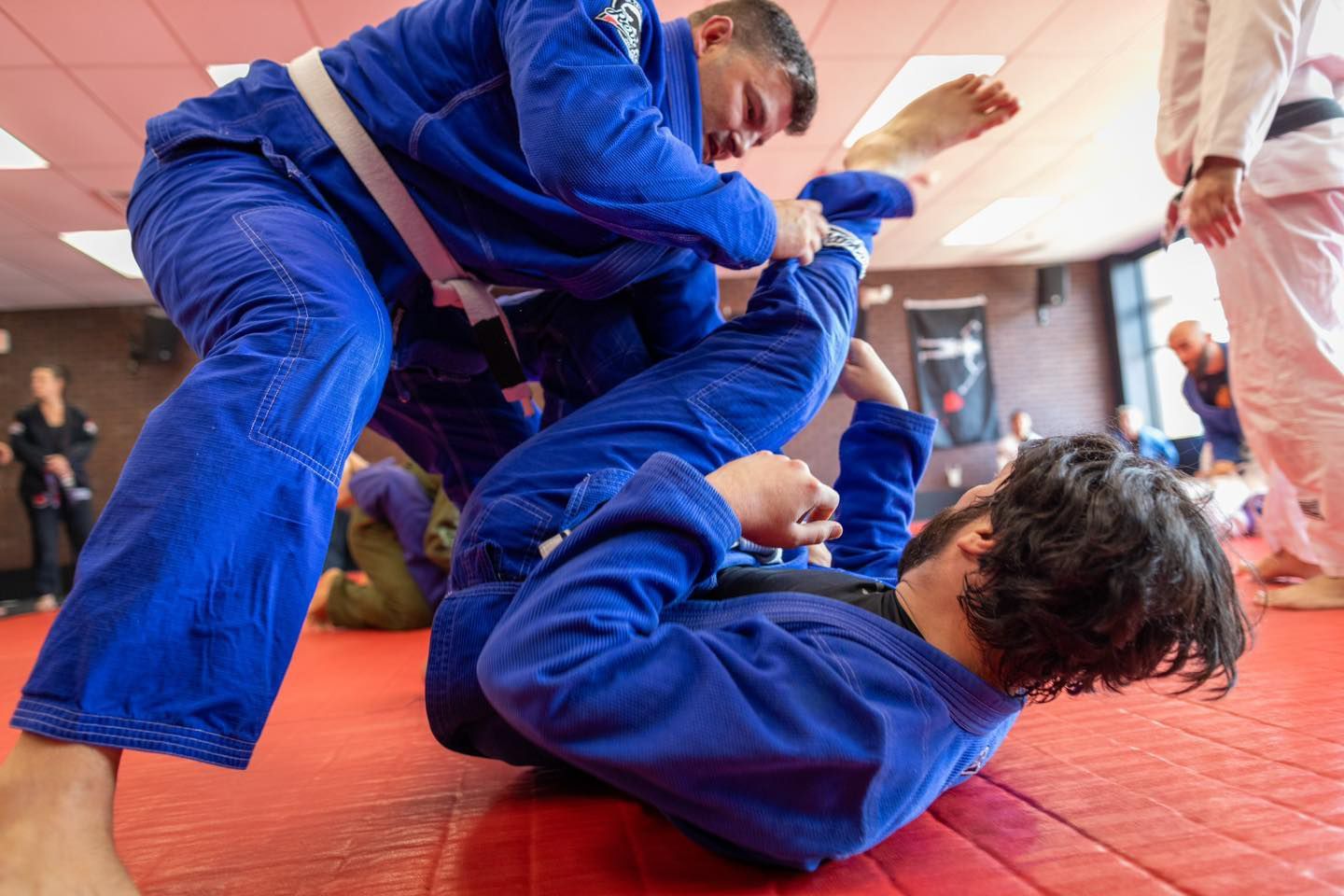
Brazilian Jiu Jitsu

Kettlebell HIIT
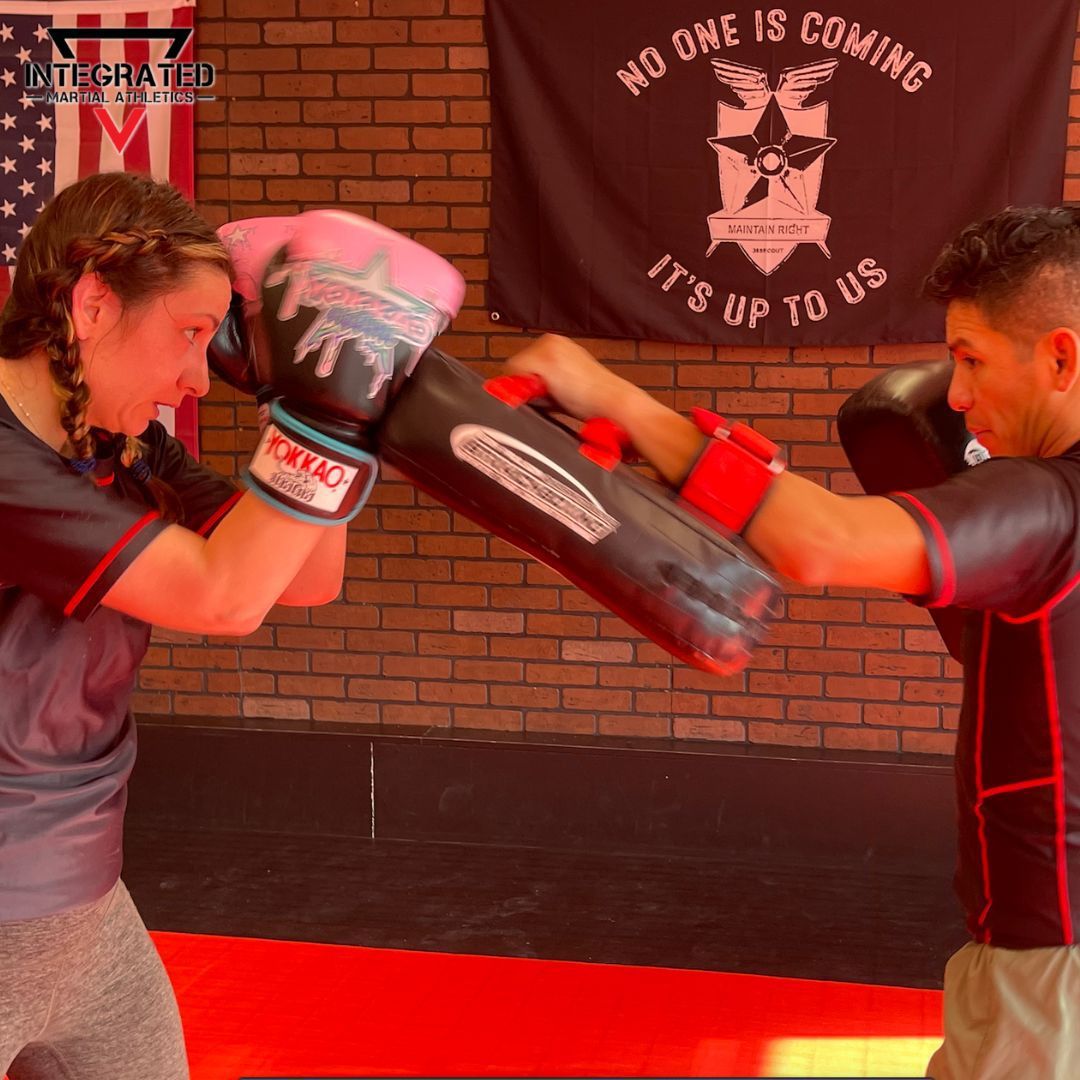
Adult Muay Thai
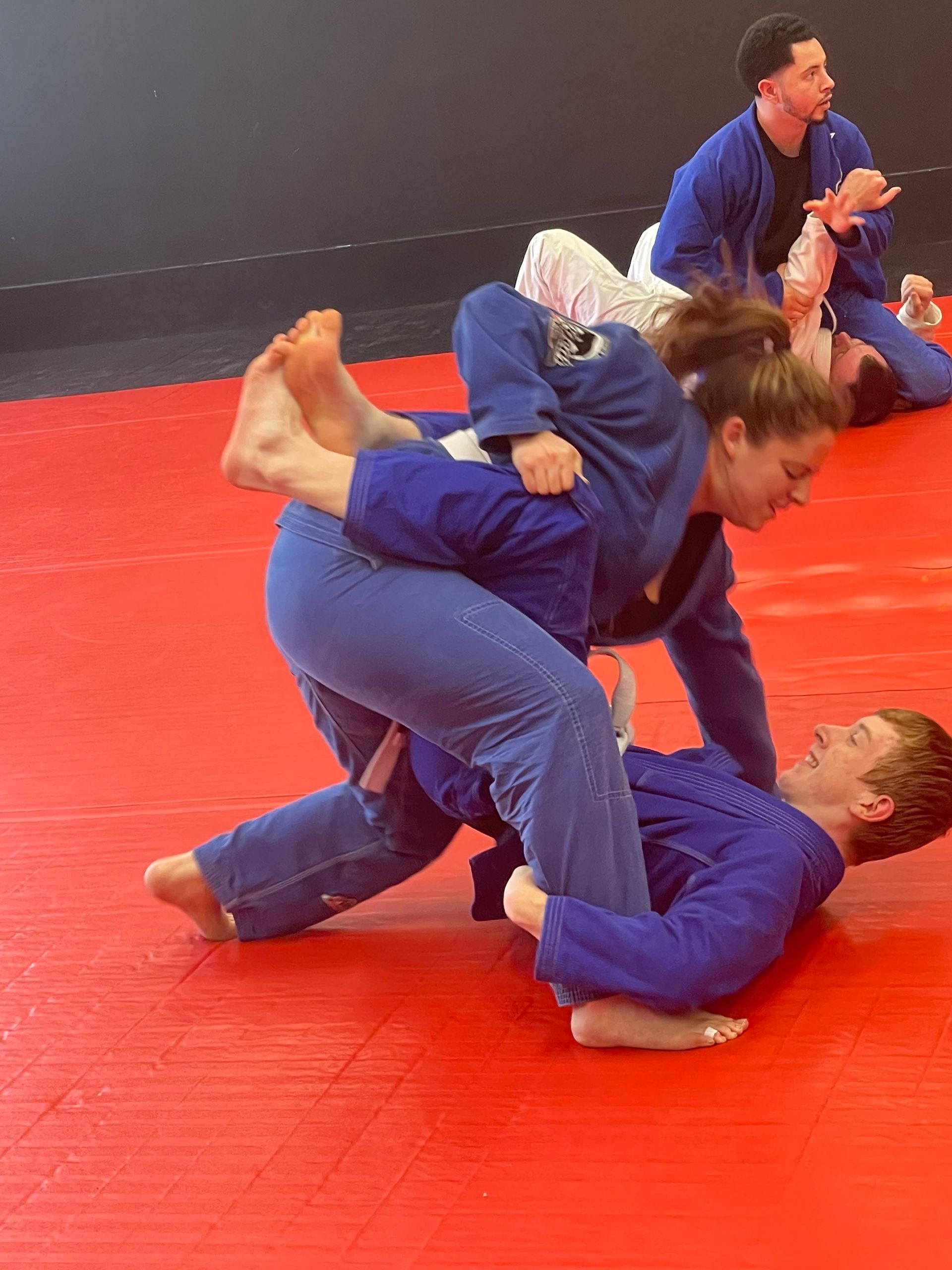
Private Lessons
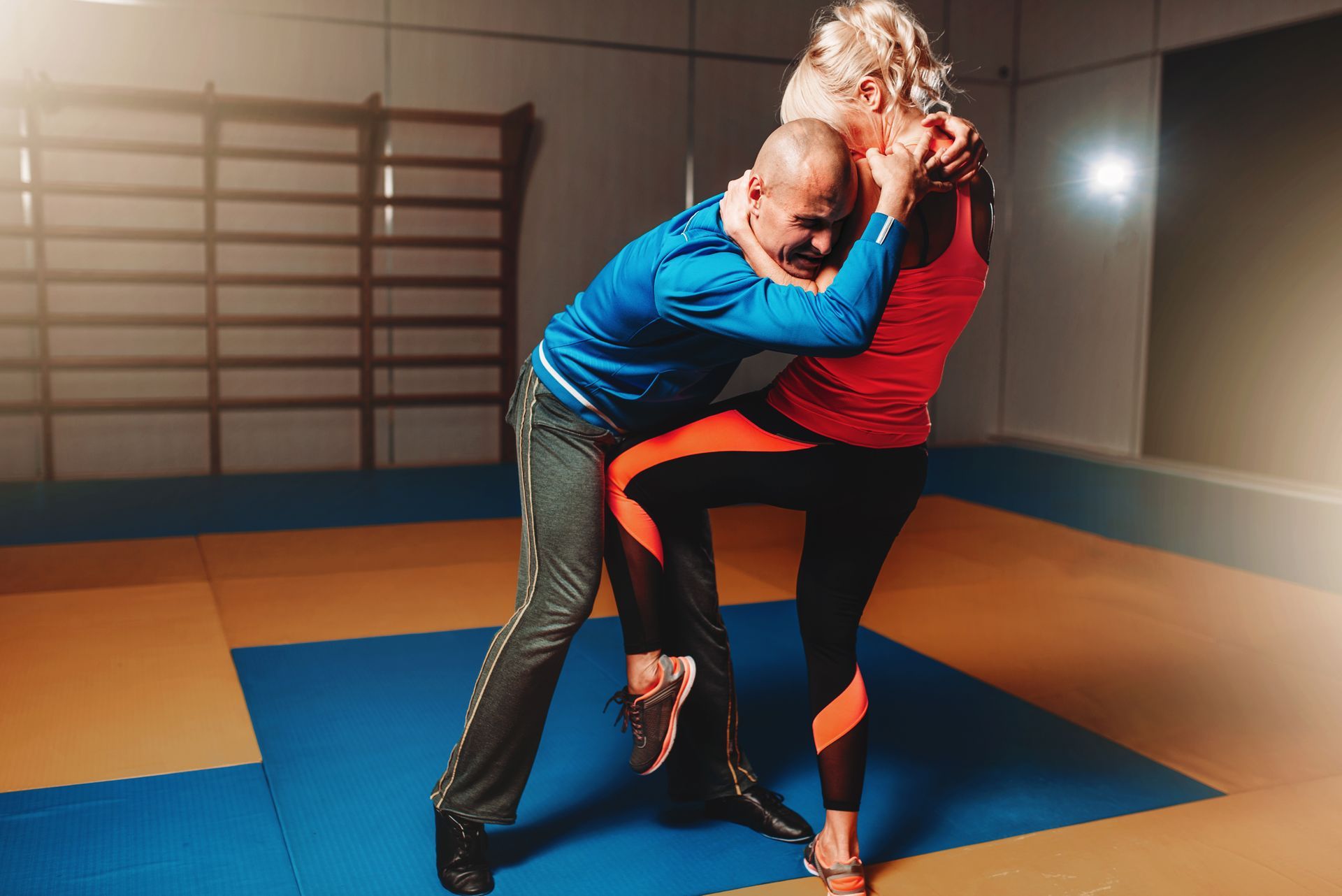
Corporate Self Defense Seminars


