This Was Never a Two-on-One
This Was Never a Two-on-One
What a Violent Encounter Teaches About Real-World Capability
There’s a moment in almost every violent encounter where the problem changes.
Sometimes it happens slowly enough that you can recognize it.
Sometimes it happens in a fraction of a second.
And sometimes the advantage you thought you had disappears before you realize it was ever gone.
Recently, I sat down with the legendary John “Shrek” McPhee of SOB Tactical to break down an officer-involved encounter with an edged-weapon threat.
Shrek is a friend of mine and brings decades of real-world experience to the table. There are few people whose perspective I respect more when it comes to problems like this.
We looked at the encounter from beginning to end.
The concealed hand.
The visible bulge.
The body beginning to coil.
The pre-attack look-away.
Reactionary distance.
Positioning.
Contact and cover.
The attack itself.
And ultimately, what happened when two officers who should have represented a significant tactical advantage became separated into individual problems.
Before we go deeper, watch the original collaboration with Shrek:
WATCH COACH CHUCK + SHREK ON YOUTUBE →
Then come back, because there are several lessons here that extend far beyond this particular encounter.
THIS WAS NEVER A TWO-ON-ONE
On paper, two officers confronting one suspect sounds like a significant numerical advantage.
But numbers alone don’t create an advantage.
Position does.
Coordination does.
Roles do.
Distance does.
And the ability to recognize when the situation is changing does.
Once the contact-and-cover responsibilities began to break down, the encounter effectively stopped being two-on-one.
It became a series of individual problems.
That distinction matters.
You can have more people.
More equipment.
More strength.
More training.
More resources.
None of those things automatically make you capable.
You have to know how to use them.
That principle applies well beyond law enforcement.
In martial arts, people assume size, strength, rank or athleticism automatically translates into capability.
It doesn’t.
Those things are resources.
Capability is your ability to employ those resources effectively when the problem becomes uncertain, dynamic and resistant.
That’s a very different standard.
THE FIGHT STARTS BEFORE THE FIRST STRIKE
One of the reasons I spend so much time talking about pre-incident indicators is that violence rarely begins with the first punch, stab or shot.
There is usually information available beforehand.
The question is whether you recognize it.
In this encounter, there were several things worth paying attention to.
A concealed hand.
A visible bulge.
Changes in body posture.
The body beginning to coil.
A look away before action.
None of those things individually guarantees that someone is about to attack.
Context matters.
But indicators begin to accumulate.
And as they accumulate, your decisions should begin to change.
Distance may need to change.
Positioning may need to change.
Your hands may need to change.
Your communication may need to change.
Your level of readiness may need to change.
This is one of the biggest mistakes people make when thinking about self-protection.
They imagine a clearly defined moment when a situation suddenly becomes dangerous.
Real life usually isn’t that clean.
Problems develop.
Information accumulates.
The environment changes.
And if you wait until the danger becomes undeniable, you may already be behind.
DISTANCE BUYS YOU TIME
Distance is one of the most important variables in any physical confrontation.
The closer someone gets, the less time you have to process information and respond.
That becomes even more important when an edged weapon is involved.
A person at conversational distance can close space extremely quickly.
If your first recognition that something is wrong happens when the weapon is already moving, your options have narrowed dramatically.
That’s why reactionary distance matters.
It isn’t simply about staying far away from everyone.
It’s about understanding what the distance between you and another person allows them to do—and what it allows you to do.
Distance creates time.
Time creates decisions.
Decisions create options.
But there is another side to this.
Distance without awareness doesn’t help much.
You have to recognize when the environment is telling you that the distance needs to change.
NEVER RUSH INTO A KNIFE FIGHT
One of the strongest points Shrek makes in our conversation concerns what happens when another person enters an already developing edged-weapon encounter.
The instinct to help is understandable.
But moving toward a dangerous problem without understanding your role, your angle, your partner’s position or what the threat is doing can create another problem instead of solving the first one.
More people do not automatically mean more capability.
This is where contact and cover become important.
Roles matter.
Communication matters.
Positioning matters.
If two people independently rush toward the same problem, they can interfere with one another, lose angles and unintentionally turn one coordinated response into two separate fights.
Sometimes the most important thing you can do isn’t move faster.
It’s understand the problem faster.
DECISIVENESS MATTERS
There’s another side to this.
Creating time and distance doesn’t mean becoming passive.
There are moments when a situation changes and decisive action becomes necessary.
Hesitation carries consequences too.
That’s one of the difficult realities of rapidly developing encounters.
You’re constantly balancing incomplete information against a problem that may be developing faster than you can process it.
Observe.
Orient.
Decide.
Act.
Then reassess.
The objective isn’t perfect decision-making.
Perfect information rarely exists.
The objective is developing enough awareness, skill and preparation that you can make a reasonable decision while the problem is still moving.
That requires training.
THE PROBLEM DOESN’T END WHEN SOMEONE GOES DOWN
Another important lesson from this encounter happens after the most obvious portion of the confrontation.
People tend to mentally stop a scenario when the apparent threat goes down.
Real incidents don’t necessarily work that way.
The environment still has to be assessed.
Weapons still matter.
Other people still matter.
Injuries still matter.
Communication still matters.
And your own physiological response still matters.
The event may not be over simply because the most dramatic part of it has ended.
This is why training cannot consist entirely of performing a technique and mentally checking out afterward.
Solve the immediate problem. Then reassess.
What changed?
What remains?
What is the next problem?
That habit has to be developed before you need it.
PRESSURE REVEALS WHAT YOU ACTUALLY OWN
There’s a difference between knowing something and being able to access it.
You can understand a technique intellectually.
You can perform it perfectly in a cooperative drill.
You can explain the principle behind it.
None of that guarantees you’ll be able to use it when the environment becomes chaotic.
Pressure changes things.
Your vision can narrow.
Your breathing changes.
Fine motor control can deteriorate.
Your ability to process information can slow down.
Communication becomes more difficult.
And decisions that seem obvious while watching a video become considerably less obvious when you’re inside the problem.
That doesn’t mean training is useless.
It means training has to prepare you for more than technique.
You have to train recognition.
Decision-making.
Position.
Distance.
Communication.
Emotional regulation.
And the ability to continue thinking while something is happening to you.
That’s where capability begins to separate itself from knowledge.
NUMBERS DON’T CREATE AN ADVANTAGE. CAPABILITY DOES.
This is probably the biggest lesson I took from the encounter.
We tend to count resources.
Two people versus one.
Stronger versus weaker.
Armed versus unarmed.
Experienced versus inexperienced.
Black belt versus white belt.
But resources are only potential.
Capability is what turns potential into options.
Position.
Distance.
Awareness.
Communication.
Decision-making.
Training.
Those are what allow you to use the resources you already possess.
And when pressure arrives, you don’t want to discover for the first time whether your training actually works.
A QUESTION WORTH ASKING
Where in your own training are you relying on an assumption instead of demonstrated capability?
Maybe you assume you’ll recognize the problem.
Maybe you assume you’ll create distance.
Maybe you assume you’ll remain calm.
Maybe you assume you’ll make the right decision.
Don’t condemn yourself for the answer.
Use it.
Because identifying the gap gives you something to train.
Take something you normally practice under perfect conditions and introduce manageable uncertainty.
Add resistance.
Change the starting position.
Work while tired.
Have your partner behave differently than expected.
Force yourself to make a decision instead of simply performing a memorized sequence.
Not recklessly.
Not to “win” training.
But to discover what remains available when the problem stops cooperating.
Pressure reveals what you actually own.
WANT TO SEE THE COMPLETE BREAKDOWN?
This is where the short collaboration ends and the deeper conversation begins.
Shrek and I go through the entire encounter and break down the pre-attack indicators, interview posture, reactionary distance, contact-and-cover responsibilities, edged-weapon attack, weapon transitions, decisive action, weapon control, marksmanship and some of the larger training issues the incident exposes.
This isn’t about Monday-morning quarterbacking the officers involved.
It’s about learning from what happened.
The complete breakdown with my friend John “Shrek” McPhee is available exclusively for members of my Patreon.
WATCH THE COMPLETE BREAKDOWN ON PATREON →
Choose a Class Below!
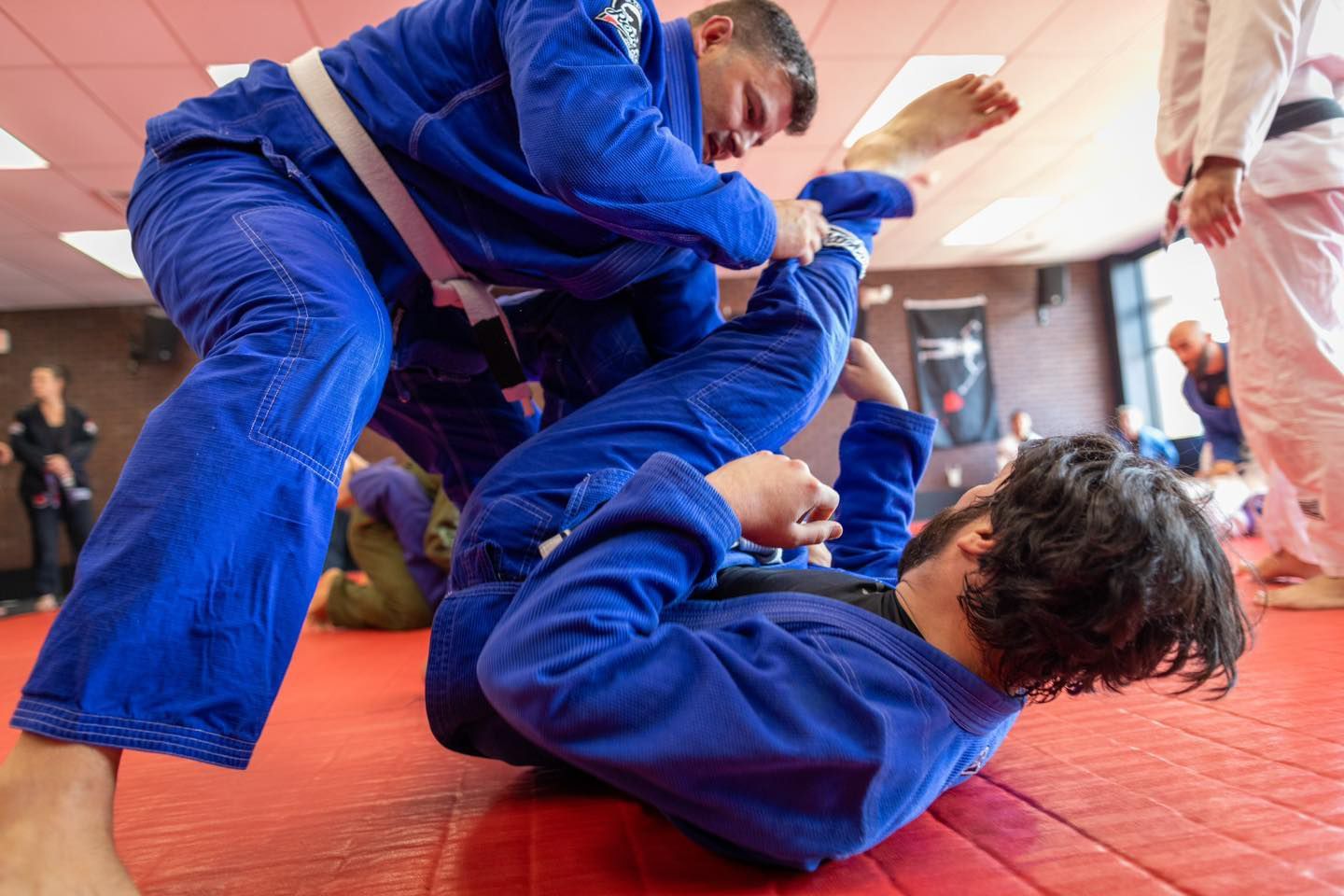
Brazilian Jiu Jitsu

Kettlebell HIIT
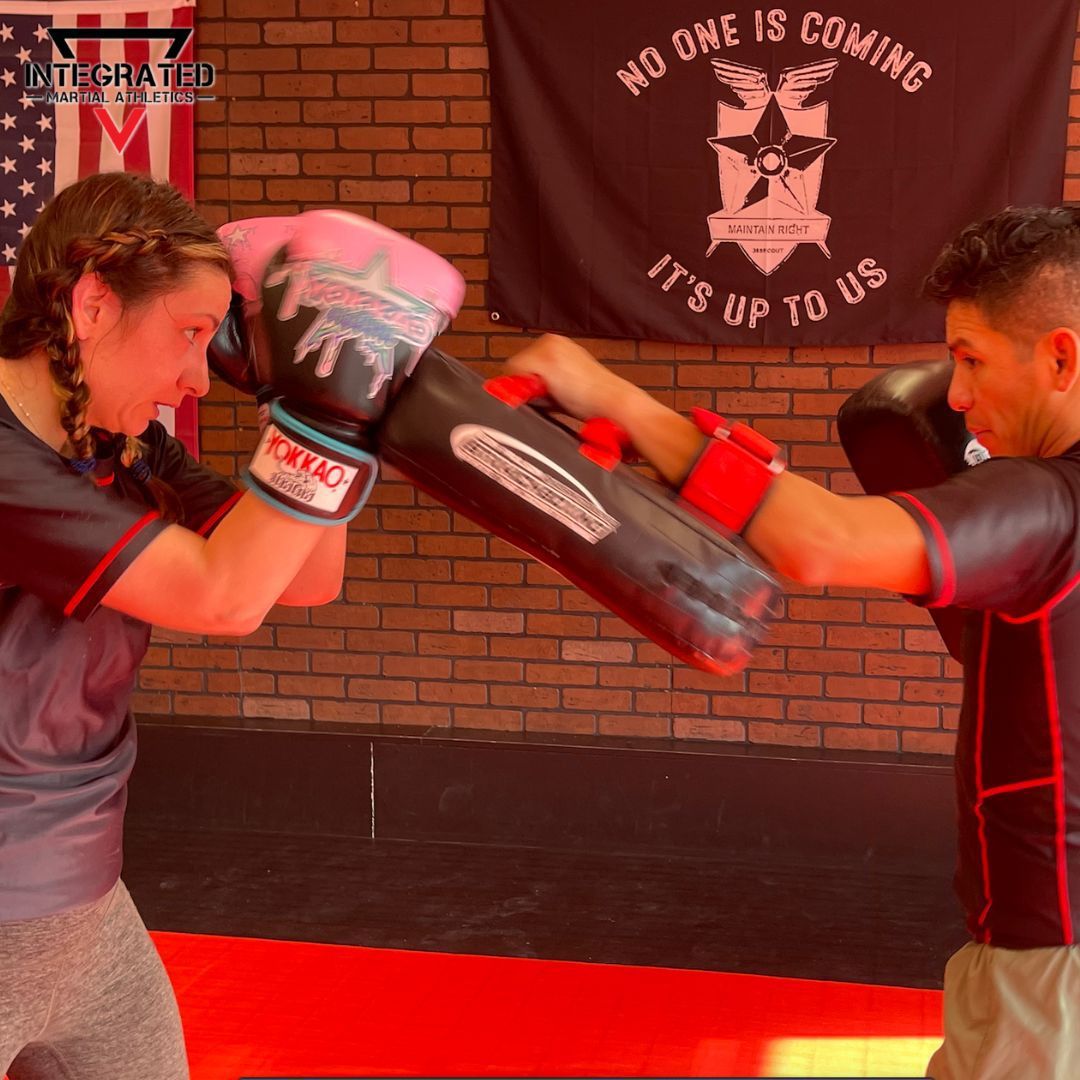
Adult Muay Thai
Private Lessons
Corporate Self Defense Seminars